

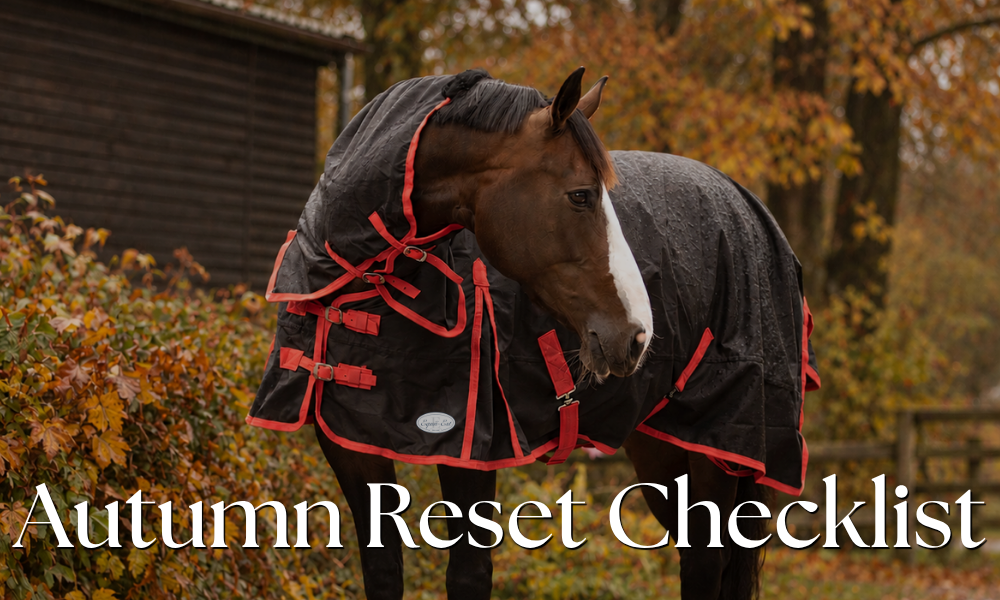
Horse Owner’s Autumn Reset Checklist: Getting Your Horse Ready for Cooler Weather
There always seems to be a point in September when you suddenly realise autumn is on its way. The mornings feel a little cooler, the evenings are drawing in, the rugs start making their way back out and the yard routine begins to shift.
It doesn’t necessarily mean everything needs to change overnight, but it is a really good time to have a quick reset and make sure you are ready for whatever the next few weeks bring.
From checking rugs and keeping an eye on changing grazing to preparing for darker evenings and wetter weather, there are plenty of little things that come with autumn horse care. Getting organised now can make that seasonal change feel much easier for both you and your horse.
So, if you are starting to feel that seasonal change at your yard too, here is our autumn horse care checklist to help you get ahead.
1. Start by Getting Your Rugs Ready
One of the first signs that autumn is creeping in is usually the rugs making their way back out of storage. Even if you’re not quite ready to use them yet, now is a good opportunity to get everything out and make sure it’s ready for when the weather does start to turn.
Have a look over the rugs you already have and check the little things that are very easy to forget about after summer. Make sure buckles, clips and surcingles are working properly, check for any tears or damaged stitching and have a look at the linings too. For turnout rugs, it’s also worth making sure they’re clean and ready to face the wet weather ahead.
If your horse has changed shape over the summer, take a moment to check the fit as well. A rug that fitted perfectly last season may sit slightly differently now, so it’s much better to find that out while you have time to sort it.
After all, nobody wants to discover a broken clip or that forgotten repair when they’re standing on the yard on the first properly cold, wet morning of autumn!
A quick rug check before autumn gets underway:
- Are all buckles, clips and fastenings working properly?
- Are the surcingles and straps secure?
- Are there any tears, worn areas or damaged stitching?
- Are the linings in good condition?
- Are your turnout rugs clean and ready for wetter weather?
- Do your rugs still fit your horse comfortably?
- Is there anything that needs repairing, cleaning or replacing before you need it?
2. Keep an Eye on the changing weather
Once you know your rugs are ready to go, the next thing to keep an eye on is the weather. Early autumn can be particularly unpredictable. We can still have some lovely warm days, followed by a wet, windy evening or a noticeably cooler night.
Rather than feeling like you need to change your horse’s routine simply because autumn has arrived, look at what the weather is actually doing where you are. Overnight temperatures, wind and rain are all worth keeping an eye on, along with how much shelter your horse has available.
Every horse is different too. Their age, condition, coat, whether they are clipped or unclipped and how they generally cope with changes in temperature can all influence the decisions you make as the weather starts to turn.
At this stage of the season, being prepared is often the most useful thing you can do. Keep checking the forecast, have your different rug options ready and pay attention to how your own horse is coping with those changing conditions.
Wondering when those cooler nights actually mean it’s time to start rugging?
We’re going to take a closer look at exactly that in our next blog, When Should You Start Rugging Your Horse?
3. take a moment to check how your horse is looking
While you’re getting everything else ready for autumn, it’s a good opportunity to take a step back and have a proper look at how your horse is heading into the new season too.
It’s surprising how easy it can be to miss small changes when you see your horse every day. Take a little time to look at their overall condition, feel over them and think about whether anything has changed during the summer months. Their weight, topline and general condition are all useful things to keep an eye on as you move into autumn.
You may also start to notice their coat changing as the days get shorter. Some horses seem to turn fluffy almost overnight, while others take a little longer to get the memo that summer is coming to an end!
Keeping track of these changes gives you a much better starting point when you begin making decisions about their autumn routine. Rather than changing everything simply because the season has changed, you can make those adjustments around the horse standing in front of you.
4. Notice What’s Changing in the field
While you’re keeping an eye on any changes in your horse, it’s worth doing the same with their surroundings. The fields can begin to look and feel very different as we move further into autumn, and your usual summer routine may gradually need to change with them.
Grass growth can start to slow, the ground may become softer after more frequent rain, and some horses will begin spending a little more time away from the field. Depending on your own set-up, this might also be the point when forage starts becoming a bigger part of the daily routine again.
There’s no need for everything to change at once. Instead, keep an eye on what is happening in your own fields and how your horse is responding. Autumn can look completely different from one yard to the next, so the changes you make should work for your horse and the way you manage them.
It’s also a useful time to think a few weeks ahead. If your turnout routine is likely to change as the ground gets wetter or the evenings get darker, getting organised now can make that transition much easier when the muddy season really begins.
5. Get ahead of the muddy season
We all know how quickly a perfectly good field can turn into a very different story once the autumn rain really gets going. That gateway you haven’t given a second thought to all summer can suddenly become the part of the day you dread!
Before the wetter weather properly settles in, have a walk around the areas you use every day and think about which ones usually become more difficult through autumn and winter. Gateways, paths, water points and high-traffic areas are all worth keeping an eye on, particularly anywhere that tends to become wet or churned up quickly.
It’s also a good opportunity to check fencing, gates and water troughs while the weather is still relatively kind. If your horse relies on natural or field shelter, take a look at that too and make sure you’re happy with what they have available as the conditions begin to change.
Back at the yard, start thinking about the darker evenings as well. Check the lighting in the areas you regularly use and make sure everything you rely on is working before those evenings really start drawing in.
A little preparation now won’t stop autumn from becoming muddy – unfortunately, we haven’t found the answer to that one yet, but it can make those wet, dark evenings considerably easier to deal with.
6. Think about how your routine might change
Autumn doesn’t just change the weather, it can change the whole rhythm of the yard too. The evenings gradually get darker, turnout routines may start to shift and fitting everything into the day can suddenly take a little more planning.
Think about what your horse’s routine is likely to look like over the next few weeks. Will they stay in the same amount of work? Are you likely to be riding earlier in the morning or later in the evening? Will they begin spending more time in the stable as turnout changes?
If your horse is in regular work, this may also be the time you start thinking about whether you’re going to clip. There’s no need to make that decision simply because autumn has arrived, but noticing how their coat is changing and how they’re coping with their workload can help you decide what works best for them.
Clipping can also change how you manage your horse afterwards, particularly when it comes to keeping them comfortable as the weather gets cooler. Thinking about your plans ahead of time gives you the chance to make sure you have what you need rather than having to reorganise everything at the last minute.
And don’t forget about yourself in all of this. Now is probably a good time to find the head torch, charge up the lights and work out where you put your warm yard coat at the end of last winter, because those dark evenings always seem to arrive sooner than we expect!
7. Give your yard Essentials a little reset
While you’re getting your horse and their routine ready for autumn, it’s worth giving all those everyday yard essentials a quick once-over too. They might be small things, but having them ready can make life considerably easier when the wet weather arrives.
Have a look through your grooming kit and replace anything that has seen better days over the summer. It’s also a good time to make sure you have plenty of clean towels to hand, because once muddy legs, wet rugs and soggy horses become part of the daily routine again, there never seem to be enough of them!
Take a moment to check your horse’s first-aid kit too. Make sure everything you would normally expect to have is still there, check expiry dates where appropriate and replace anything that has been used up. Hopefully you won’t need it, but it’s much better to find out something is missing now rather than when you actually do.
Then there are all the little extras that make autumn on the yard that bit easier: spare rug clips and fastenings, a dry pair of gloves, waterproofs that are actually still waterproof and somewhere sensible to keep the things you’re going to start reaching for more often.
You don’t need to completely reorganise the tack room or buy a whole new set of everything. Sometimes an autumn reset is simply about checking what you already have, sorting the things that need a little attention and making sure the essentials are ready when you need them.
Your Autumn Reset Checklist
You don’t need to change everything the moment autumn arrives. A little preparation now can make the transition into cooler, wetter and darker days much easier. Here’s a quick recap of the things worth checking as the season begins to change.
Rugs
- Get stored rugs back out and check their condition
- Check buckles, clips, surcingles and stitching
- Make sure your rugs still fit comfortably
- Sort any cleaning or repairs before you need them
Your Horse
- Take a fresh look at your horse’s overall condition
- Keep an eye on changes to their coat
- Notice how they’re coping as temperatures begin to change
Field & Turnout
- Keep an eye on changing grass and ground conditions
- Check gateways, fencing, water points and shelter
- Think ahead to areas that usually struggle once the rain arrives
Routine
- Think about how darker evenings might affect your daily routine
- Consider whether workload or turnout is likely to change
- Start thinking ahead about clipping if it’s relevant to your horse
Yard Essentials
- Check your grooming kit and clean towels
- Give your first-aid kit a once-over
- Find your waterproofs and warm yard gear
- Stock up on any little essentials you know you’ll need
Those In-Between autumn Days
Early autumn can bring some of the trickiest weather to dress for. The days can still feel surprisingly mild, while overnight temperatures begin to drop and the wind and rain start making a more regular appearance.
It’s those in-between days that can make having a few different rugging options particularly useful. You might not be reaching for the heavier rugs just yet, but having something lightweight ready means you have an option when the weather starts to become a little less predictable.
As always, what your horse needs will depend on the individual horse, their coat, whether they’re clipped, the conditions where you are and how they cope with the weather. The aim isn’t to rug simply because autumn has arrived, it’s about having the right options available if andwhen you need them.

Meet the Atlantic 0g Lightweight Turnout
For those changeable days when you want weather protection without adding fill, our Atlantic 0g Lightweight Turnout is a really useful rug to have ready.
Made with a 600 denier outer and a smooth nylon lining, the Atlantic has a 3000mm waterproof rating and a breathability rating of 3000–8000 MVT, helping to provide reliable weather protection while allowing moisture to move away from your horse.
It also comes with a detachable neck, giving you a little more flexibility as the weather changes, along with adjustable chest clip fastenings so you can get a comfortable fit for your horse.
With no fill, it’s a practical option to have in your rug collection for those unpredictable, in-between days when the weather starts to turn but you don’t necessarily want the additional warmth of a filled turnout rug.
If you’re getting your rugs organised as part of your autumn reset, you can take a closer look at the Atlantic 0g and see whether it could be a useful addition to your horse’s wardrobe.
Leave a Reply